从成本到黄金收入平台:五百万块机上娱乐屏幕的机遇
APEX全球首席执行官Joe Leader博士探讨了当今椅背式IFE的强劲市场,以及它为航空公司创造的巨大收入潜力。APEX数据显示,椅背式IFE带来的机遇即将激增。文章《从成本到黄金收入平台:五百万IFE屏幕的机遇》首发于《飞机内饰国际》。

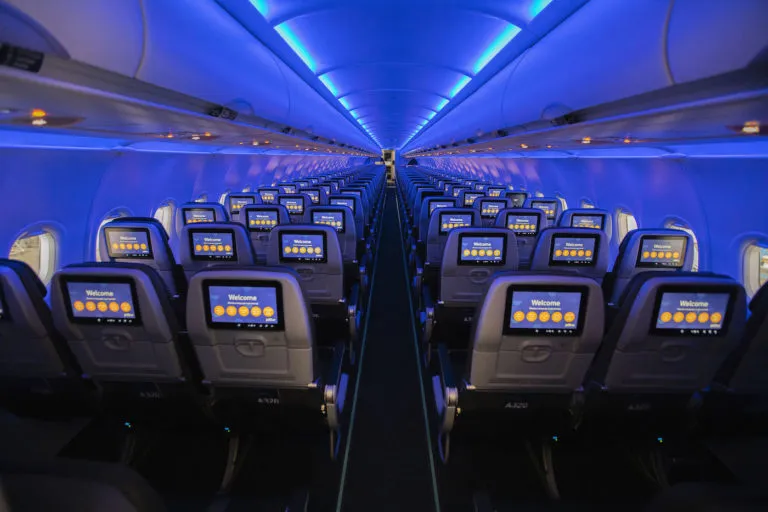
【图片位置1:Jetblue’s Multi-Screen Experience】
The most valuable digital real estate in aviation may already sit directly in front of the passenger. For three, six, or even twelve uninterrupted hours, a seatback in-flight entertainment (IFE) display can command attention that few airport billboards, social feeds, or search engines can replicate within the same journey context.
航空业最有价值的数字地产可能已经就在乘客正前方。在三个、六个甚至十二个不间断的小时里,座椅靠背机上娱乐(IFE)显示器所能吸引的注意力,是机场广告牌、社交信息流或搜索引擎在同一旅程场景中难以复制的。
Until recently, most airlines evaluated that asset primarily through entertainment, passenger satisfaction, and competitive differentiation.
直到最近,大多数航空公司主要还是从娱乐、乘客满意度和竞争差异化的角度来评估这一资产。
Research carried out by APEX suggests that this calculation could change far faster than conventional wisdom anticipates. Across five major US airline groups, our analysis projects that the installed base of seatback screens will rise from roughly 408,000 in 2025, to nearly 793,000 by 2032 – an increase of 94%.
APEX开展的研究表明,这种计算方式的变化可能远比传统认知所预期的要快得多。针对美国五大航空集团,我们的分析预测,座椅靠背屏幕的装机量将从2025年的大约408,000块,上升到2032年的近793,000块——增幅达94%。
At first glance, those numbers chronicle the emphatic resurgence of embedded in-flight entertainment, yet the more consequential story concerns what happens when nearly 800,000 screens become connected, intelligent, and commercially productive.
乍看之下,这些数字记录了嵌入式机上娱乐的强势复兴,但更具深远意义的故事在于,当近80万块屏幕变得互联、智能并具备商业生产力时,会发生什么。
The screen becomes a platform
屏幕成为平台
Connectivity creates the channel, identity supplies context, commerce enables the transaction, and artificial intelligence (AI) creates relevance. Once those capabilities converge, a seatback display can progress from being passive entertainment hardware into becoming an interactive passenger platform capable of recognising context, measuring engagement, and presenting something useful at precisely the appropriate moment.
连接创造渠道,身份提供背景,商务促成交易,人工智能(AI)创造相关性。一旦这些能力汇聚,座椅靠背显示器就能从被动的娱乐硬件,进步为能够识别背景、衡量参与度,并在恰当时机呈现有用内容的互动式乘客平台。
Suddenly, the airline gains more than another cabin amenity. The airline gains a proprietary digital relationship spanning some of the longest uninterrupted periods of the passenger journey.
突然间,航空公司获得的不只是又一项客舱设施。航空公司获得的是一种专有的数字关系,覆盖乘客旅程中一些最长的不间断时段。
United Airlines is demonstrating the commercial proposition most visibly through Kinective Media, which reaches more than 108 million unique flyers, offers advertisers more than 120 targetable signals, and cites approximately 3.5 hours of attention per traveller across United-owned media channels.
美联航通过Kinective Media最为明显地展示了这一商业主张,该平台触达超过1.08亿独立旅客,为广告商提供120多种可定向信号,并称每位旅客在美联航自有媒体渠道上的注意力时长约为3.5小时。
Delta Air Lines is validating the media-network trajectory through moves toward personalised engagement, commerce, and dedicated advertising capabilities, while American Airlines is transforming the hardware question by restoring seatback displays across its narrowbody fleet.
达美航空正通过向个性化互动、商务和专属广告能力的举措,验证媒体网络的发展轨迹;而美国航空则通过在其窄体机队中恢复座椅靠背显示器,正在改变硬件这一问题的性质。
Together, those decisions create a catalyst that international airlines will study not only for passenger preference, but for recurring commercial value.
这些决策共同形成了一个催化剂,国际航空公司将不仅出于乘客偏好,也出于经常性商业价值来研究它。

【图片位置2:Customers can watch Apple+ programming on the 13in 4K OLED IFE screens in United’s Elevated B787-9. Image: United Airlines】旅客可以在美联航Elevated B787-9的13英寸4K OLED IFE屏幕上观看Apple+节目。图片来源:美联航
From attention to a permission dividend
从注意力到许可红利
Passenger trust must anchor that economic model. Greater personalisation can produce stronger engagement and more valuable commercial outcomes, while excessive targeting can extinguish confidence with remarkable speed. Sophisticated AI may therefore sometimes create its greatest value by deciding not to display an advertisement at all.
乘客信任必须成为这一经济模式的锚点。更强的个性化可以带来更高的参与度和更有价值的商业成果,而过度定向则可能以惊人的速度摧毁信任。因此,精密复杂的AI有时可能通过决定完全不展示某条广告,来创造其最大价值。
Permission, transparency and restraint can generate what I would call a ‘permission dividend’. Passengers who perceive genuine value from personalisation gain greater reason to remain engaged, while airlines gain greater latitude to deliver relevant commerce without degrading the journey. Done correctly, that relationship can compound trust, engagement, commercial relevance, and reinvestment in the passenger experience.
许可、透明和克制可以产生我所说的”许可红利”。从个性化中感受到真正价值的乘客,更有理由保持参与;而航空公司则获得更大的空间,在不损害旅程体验的前提下提供相关商务。如果做得好,这种关系可以让信任、参与度、商业相关性和对乘客体验的再投资形成复合效应。
Co-branded credit cards fundamentally altered airline economics by creating immense value beyond the transportation transaction itself. Checked baggage subsequently established another prodigious category of ancillary revenue.
联名信用卡通过创造远超运输交易本身的巨大价值,从根本上改变了航空公司的经济模式。托运行李随后又建立了另一个巨大的辅营收入类别。
Now, aviation’s connected commerce media could plausibly develop into one of aviation’s most consequential new opportunities since those breakthroughs. Advertising alone will not rival mature credit-card portfolios, yet upgrades, retail, loyalty activation, sponsored content, partner services, and permission-based offers create multiple revenue pathways from the same installed asset.
如今,航空业的互联商务媒体有可能发展成为自那些突破以来航空业最具影响力的新机遇之一。仅靠广告不会与成熟的信用卡组合相匹敌,但升舱、零售、忠诚度激活、赞助内容、合作伙伴服务和基于许可的优惠,可以从同一装机资产中创造出多条收入路径。

【图片位置3:American Airlines flies with multifunctional seatback displays】美国航空配备多功能座椅靠背显示器
A new equation for aircraft interiors
飞机内饰的新方程式
The economics of aircraft interiors consequently now face a profound recalibration. Cabin planners have traditionally evaluated embedded IFE screens through capital expense, weight, power, seat integration, maintenance, reliability, content cost, and passenger satisfaction.
因此,飞机内饰的经济学如今面临深刻的重校准。客舱规划者传统上通过资本支出、重量、功率、座椅集成、维护、可靠性、内容成本和乘客满意度来评估嵌入式IFE屏幕。
The moment a connected screen generates measurable recurring revenue alongside definitive NPS ROI where customers pay more, its economics change from being a cabin expenditure toward being a productive asset.
当一块互联屏幕在带来明确净推荐值(NPS)投资回报(即客户愿意支付更多)的同时,还能产生可衡量的经常性收入时,其经济属性就从客舱支出转变为生产性资产。
Investment committees can then frame the decision differently. Instead of asking only, ‘What will these screens cost?’, executives can ask, ‘What passenger and economic value can these connected assets generate throughout their useful lives?’ That distinction could influence line-fit selections, retrofit programmes, seat architecture, connectivity strategy, and future cabin design.
投资委员会随后可以以不同的方式构建决策框架。高管们不再只问”这些屏幕要花多少钱?”,而是可以问”这些互联资产在其整个使用寿命内能产生多少乘客价值和经济价值?”这一区别可能影响原厂安装选型、改装项目、座椅架构、连接战略和未来客舱设计。
Improved economics can subsequently create a virtuous cycle. Stronger monetisation supports better screens, faster connectivity, and richer digital experiences, while those investments stimulate greater engagement and increasingly valuable interactions. Successful execution can advance inflight entertainment from being a perceived cost centre, to being a competitive differentiator, and now a sustainable revenue platform.
经济性的改善随后可以形成良性循环。更强的变现能力支持更好的屏幕、更快的连接和更丰富的数字体验,而这些投资又激发更高的参与度和越来越有价值的互动。成功执行可以将机上娱乐从被视为成本中心,推进为竞争差异化因素,如今再推进为可持续的收入平台。
From 1.8 million screens toward five million
从180万块屏幕迈向500万块
The nearly 800,000 IFE screens in the USA market are only the start of the story. Today, APEX estimates that approximately 1.8 million active seatback screens operate worldwide, including roughly 1.4 million outside the five major US airline groups in our current analysis.
美国市场近80万块IFE屏幕只是故事的开端。如今,APEX估计全球约有180万块活跃的座椅靠背屏幕在运行,其中约140万块位于我们当前分析中的美国五大航空集团之外。
APEX’s modelling indicates that, by the end of the 2030s, the worldwide installed base of seatback IFE displays will surpass five million. Reaching that threshold requires neither universal narrowbody adoption nor wholesale abandonment of personal-device entertainment among low-cost carriers.
APEX的建模表明,到2030年代末,全球座椅靠背IFE显示器的装机量将超过500万块。达到这一门槛既不需要窄体机的普遍采用,也不需要低成本航空公司全面放弃个人设备娱乐。
Continued near-ubiquity across widebodies, accelerating single-aisle penetration, global fleet expansion, and selective retrofits can plausibly propel the industry toward that scale.
宽体机上持续近乎普及、单通道飞机渗透加速、全球机队扩张以及选择性改装,都有可能推动行业迈向这一规模。
Five million screens would create something that aviation has never possessed at comparable magnitude: a global, airline-owned network of connected passenger touchpoints. Asia supplies extraordinary scale through fleet growth, Europe presents perhaps the largest conversion opportunity, and the Middle Eastern carriers can amplify the trend through premium-service expectations and differentiated onboard investment. International adoption could accelerate not from imitation alone, but from a fundamentally improved economic proposition.
500万块屏幕将创造出航空业从未在同等规模上拥有过的东西:一个全球性的、航空公司自有的互联乘客触点网络。亚洲通过机队增长提供了非凡的规模,欧洲或许提供了最大的转化机遇,而中东航空公司则可以通过高端服务预期和差异化机上投资来放大这一趋势。国际采用率的加速可能不仅来自模仿,更来自根本上改善的经济主张。
Demonstrable recurring commercial returns materially change the comparison between embedded IFE and ‘bring your own device’. A proprietary screen capable of generating permission-based revenue competes on a markedly different basis from hardware justified exclusively through passenger satisfaction. That shift could help finance the passenger-experience improvements that make the platform progressively more compelling.
可证明的经常性商业回报,实质性地改变了嵌入式IFE与”自带设备”之间的比较。一块能够产生基于许可收入的专有屏幕,其竞争基础与仅以乘客满意度为理由的硬件截然不同。这一转变可以帮助为那些使平台越来越有吸引力的乘客体验改进提供资金。

Aviation’s new golden era: higher revenue, greater returns, and AI ROI
航空业的新黄金时代:更高收入、更大回报和AI投资回报
That economic test reaches far beyond inflight entertainment. The theme of APEX FTE Expo in Singapore this November, ‘Aviation’s New Golden Era: Higher Revenue, Greater Returns & AI ROI’, challenges industry leaders to move beyond describing what artificial intelligence can accomplish, and identify the specific return each application actually delivers. Revenue provides one measure, while productivity, reliability, loyalty, engagement, and a discernibly better passenger experience can provide equally persuasive returns.
这一经济检验远远超出机上娱乐的范畴。今年11月在新加坡举行的APEX FTE Expo主题为”航空业的新黄金时代:更高收入、更大回报和AI投资回报”,它挑战行业领袖超越描述人工智能能够实现什么,而去确定每个应用实际带来的具体回报。收入提供了一种衡量标准,而生产力、可靠性、忠诚度、参与度以及明显更好的乘客体验,也可以提供同样有说服力的回报。
Connected inflight entertainment offers an unusually tangible illustration of all three elements. Intelligent commerce can create higher revenue, stronger asset economics can produce greater returns, and AI can help convert passenger data into relevance without sacrificing permission or trust. When those elements reinforce one another, technology stops functioning as an impressive demonstration and starts producing measurable value.
互联机上娱乐为这三个要素提供了一个异常具体的例证。智能商务可以创造更高收入,更强的资产经济性可以产生更大回报,而AI可以帮助将乘客数据转化为相关性,同时不牺牲许可或信任。当这些要素相互强化时,技术就不再只是令人印象深刻的演示,而是开始产生可衡量的价值。
By the end of the 2030s, more than five million screens could connect airlines directly with passengers throughout the most attentive periods of their journeys. Such an opportunity reaches far beyond entertainment. Airlines will use those connected screens to fully encompass service, loyalty, commerce, and intelligently personalised engagement.
到2030年代末,超过500万块屏幕可以在乘客旅程中最专注的时段,将航空公司与乘客直接连接起来。这样的机遇远远超出娱乐范畴。航空公司将利用这些互联屏幕,全面涵盖服务、忠诚度、商务和智能个性化互动。
Aviation’s challenge now sounds deceptively simple: make every pixel earn its place, every interaction earn passenger trust, and every investment demonstrate a golden new aviation era of ROI.
航空业如今的挑战听起来似乎很简单:让每一个像素都物有所值,让每一次互动都赢得乘客信任,让每一项投资都展现出一个黄金新航空时代的投资回报。
About the author
关于作者
Joe Leader, CEO of APEX Dr Joe Leader is global CEO of APEX (the Airline Passenger Experience Association), IFSA (the International Flight Services Association), and FTE (Future Travel Experience).
Joe Leader,APEX首席执行官 Joe Leader博士是APEX(航空公司乘客体验协会)、IFSA(国际飞行服务协会)和FTE(未来旅行体验)的全球首席执行官。